Contents
Editorial
Handling extreme weather events
Taking ATM to the next level in Hong Kong
Calculating Airspace and Airport Capacity using Fast-time Simulations
Getting to Airspace Asia Pacific
How to find your way around Airspace Asia Pacific
Shaping Tomorrow’s Skies – your theatre highlights
Your Hong Kong highlights
Airspace Asia Pacific News
Back page
Platinum Sponsors:
Welcome to Airspace Asia Pacific. We look forward to seeing you in Hong Kong, China, next week as we bring together Asia Pacific’s airspace community to shape how we use the best technology and processes to deliver safe, seamless, and harmonised future skies. In this guide we'll share with you tips on how to make the most of your visit to Airspace Asia Pacific and Hong Kong, China, the theatre highlights you won't want to miss, and some fascinating reading to get you in the right frame of mind for our event.
Read full publication
Copyright © 2025
Platinum Sponsors:
Welcome to Airspace Asia Pacific 2025
It gives me great pleasure to welcome you to the inaugual Airspace Asia Pacific – a landmark event bringing the spirit and ambition of Airspace World to Hong Kong, China, in one of the most dynamic and fastest growing aviation regions in the world.
CANSO’s mission has always been to connect the global air traffic management community — to inspire collaboration, innovation, and action that will shape our future skies. Airspace Asia Pacific embodies that vision at a regional level.
At Airspace Asia Pacific, policymakers, ANSPs and other aviation industry leaders and innovators come together to share expertise, explore solutions, and advance our collective journey towards a safer, more sustainable, and seamlessly integrated airspace.
As the aviation landscape continues to evolve, Airspace Asia Pacific provides an important platform to strengthen partnerships and accelerate progress across the Asia Pacific region. I hope you make the most of the opportunities over the coming days — to connect, learn, and help define the future of air traffic management together.
Enjoy the show, and welcome to Airspace Asia Pacific.
Simon Hocquard
President and CEO, CANSO

A Warm Welcome to Airspace Asia Pacific 2025
Welcome to Airspace Asia Pacific, the region’s premier showcase for innovation, collaboration, and conversation across the airspace management industry.
This year’s event brings together a wide range of exhibitors and a packed theatre programme featuring global and regional experts discussing the issues that matter most — from airspace integration and digital transformation to sustainability and safety.
To help you get the most from your time at the show, make sure you download and explore the Airspace Asia Pacific app. You can use it to plan your schedule, bookmark sessions, connect with other attendees, and navigate the exhibition floor.
Don’t forget to check the conference theatre agenda, explore our transport and travel guides, and take time to enjoy the sights, sounds, and tastes of Hong Kong, China, during your stay.
On behalf of the CANSO team and our partners, thank you for being part of this inaugural event. We wish you an inspiring and productive few days at Airspace Asia Pacific 2025.
Agnes Krischik
Show Director, Airspace Asia Pacific

Copyright © 2025
Platinum Sponsors:
Hong Kong is no stranger to the seasonal phenomenon of typhoons, which significantly impacts the region’s air traffic system. Hong Kong Civil Aviation Department shares its lessons learned from adverse weather incidents.
Hong Kong’s peak typhoon season spans from May to November, with the most intense storms usually occurring between August and October.
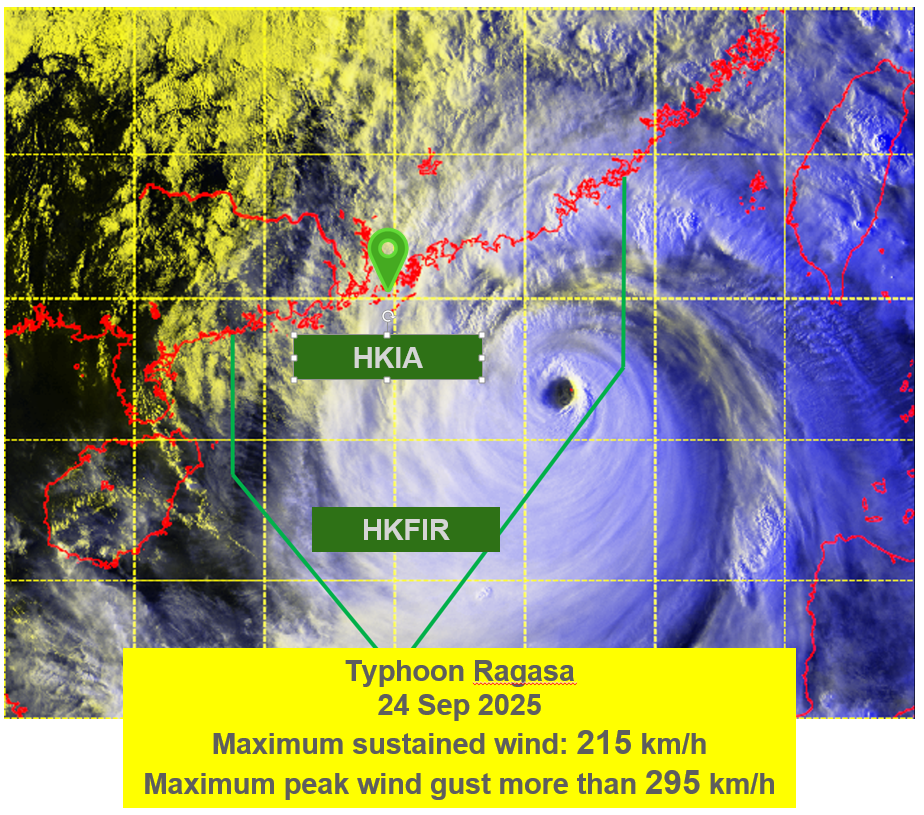
Typhoons in this region can vary greatly in duration and intensity. For instance, Typhoon Ragasa, which struck in September 2025, was one of the most powerful recorded storms, lasting for 70 hours and reaching maximum wind speeds exceeding 200 km/h. Such frequent and extreme weather events, especially during the last summer season, pose serious challenges to air traffic management, necessitating a coordinated and robust response from air navigation service providers (ANSPs) to ensure safety and minimise disruptions.
The effects of typhoons on airspace management cannot be overstated. When typhoon conditions develop, Air Traffic Flow Management (ATFM) measures are initiated to manage air traffic and prioritise safety. During Typhoon Ragasa, many airlines operating in or out of Hong Kong International Airport (HKIA) opted to cancel flights due to associated deep convection or strong crosswinds, resulting in significant disruptions at HKIA. Overflights re-routed via other Flight Information Regions (FIR) to stay away from the typhoon.
The operational complexities that arise from these extreme weather conditions are substantial; aircraft already airborne may be diverted to neighbouring airports, leading to airspace congestion and additional workload for air traffic control (ATC) as they seek alternatives to avoid hazardous weather.
This disruption not only affects local air traffic but also creates a ripple effect, resulting in delays and disruptions across regional networks. The need for more ATC staff for operational flexibility and effective communication becomes critical in these scenarios. The Three-Runway System (3RS) at HKIA, commissioned in November 2024, has introduced more dynamic management capabilities, but it also means that flight rescheduling is necessary to handle significant backlogs once weather conditions improve.
In 2025, responses to typhoons have reflected an increasing awareness of the necessity for preparedness and adaptability. One significant lesson learned by Hong Kong Civil Aviation Department (HKCAD) is the importance of real-time communication among key stakeholders, including ATC, airlines, the Airport Authority Hong Kong (AAHK), and the Hong Kong Observatory (HKO). Enhanced collaboration ensures that crucial weather information is disseminated promptly, allowing airlines to make informed decisions regarding flight operations. This proactive approach has been essential in optimising air traffic flow and resource allocation during severe weather alerts.
Moreover, the integration of technology has strengthened the resilience of the aviation sector. The HKO has implemented advanced meteorological tools that utilise artificial intelligence (AI) to provide more precise weather forecasting. This technology facilitates predictive modelling, enabling early assessments of potential impacts. Notably, the Deep Convection Notification Service (DCNS) has been created to allow for early prediction of deep convection events, which can significantly affect flight safety and operations. By leveraging these innovations, HKCAD can implement ATFM measures swiftly, thereby enhancing the overall safety and efficiency of air traffic management.
Moving forward, a multi-faceted approach is critical for managing extreme weather events in Hong Kong. Ongoing evaluations of operational protocols, strengthened stakeholder collaboration and continuous technology integration will be vital in ensuring smooth recovery processes from disruptions caused by typhoons. As climate change continues to influence weather patterns, the necessity for adaptive strategies in air traffic management becomes increasingly apparent. By learning from past experiences and refining response strategies, the sector can bolster its resilience against the challenges posed by typhoons and ensure safety for all travellers.
Investment in training and drills that simulate extreme weather scenarios is also essential. Engaging all stakeholders in tabletop exercises can facilitate a deeper understanding of coordination efforts and improve readiness for real situations. This training is essential not only for responding to typhoons but also for other extreme weather events that could impact flight operations, such as heavy rainfall or sudden shifts in wind patterns.
Handling extreme weather events like typhoons in Hong Kong requires a concerted effort involving multiple stakeholders, real-time communication and continuous improvement in operational practices. The aviation industry must embrace a culture of preparedness, utilising advanced technologies and collaborative strategies to effectively manage the impact of severe weather. As the region faces an increasingly unpredictable climate, the lessons learned this year will inform future preparedness and response strategies, ensuring that Hong Kong remains a leading international aviation hub while effectively meeting the challenges of extreme weather.
By taking proactive measures now, Hong Kong's aviation sector intends to enhance its resilience and maintain high safety and operational standards, securing the trust of airlines and travellers alike.
Copyright © 2025
Platinum Sponsors:
Airspace Asia Pacific Today talks to Victor Liu, Director General of the Hong Kong Civil Aviation Department about the three-runway system at Hong Kong and its impact on air traffic management
How is the three-runway system performing in Hong Kong?
The Three-Runway System (3RS) at Hong Kong International Airport (HKIA) became fully operational on 28 November 2024. Since then, all three runways have been running efficiently.
The 3RS allows HKIA to progressively handle up to 102 flight movements per hour, a 50% increase from the previous two-runway capacity of 68 movements. This expanded capacity boosts the airport’s cargo throughput, the tourism industry and economic growth, reinforcing Hong Kong’s status as a key international aviation hub and supporting the “Air Silk Road” initiative.
What difference has it made to air traffic management?
The 3RS has led to significant advancements in air traffic management (ATM) by enhancing passenger and cargo capacities and supporting the Airport City vision of HKIA. The expansion has allowed the Civil Aviation Department (CAD) to implement new air navigation facilities and procedures, which streamline the operations of both airport users and air traffic control.
Additionally, effective flight calibration and comprehensive training for air traffic control personnel have been pivotal. These advancements enable controllers to manage a higher volume of air traffic with greater safety and efficiency, resulting in smoother air traffic flows and reduced delays.
The 3RS has strengthened CAD's operational capabilities and positioned it to better meet future aviation demands.
Can you tell us more about the new air traffic control tower?
The New Air Traffic Control Tower (NAT) addresses the limitations of the previous tower, which had obstructed views due to new hangars and terminals. Located next to the Terminal 2 Concourse, the NAT provides air traffic controllers with unobstructed views to monitor aircraft and vehicle movements, ensuring compliance with International Civil Aviation Organization (ICAO) standards.
Equipped with state-of-the-art facilities, the NAT features a split-floor design with 19 controller positions and essential operational areas, such as the Tower Fault Reporting Centre and the Airport Meteorological Office. To prepare for the 3RS significant upgrades were made to existing air navigation services, including the integration of an Advanced Surface Movement Guidance and Control System, Digital Tower Facility, Surface Movement Radar, and new Instrument Landing Systems for enhanced ground and runway management.
What lessons have been learned about managing large projects like the three-runway system?
The 3RS project has provided several valuable lessons in managing large-scale infrastructure initiatives. The key takeaways include:
These lessons emphasise that dedicated teamwork and effective communication are vital for the successful management of large infrastructure projects like the 3RS.
How important is digitalisation to future operations?
Digitalisation is essential for the future operations of air navigation service providers (ANSP). With the expanded capacity from the 3RS, it enhances capabilities to manage future traffic growth through several key benefits:
What more can be done to improve collaboration between airports and air navigation service providers?
To enhance collaboration between airports and ANSPs, strengthening ties is key, especially as aircraft movements are projected to grow three per cent annually over the next 30 years. One key area for improvement is the integration of Airport-Collaborative Decision Making (A-CDM) and ATFM.
By enhancing operational procedures and information exchange between A-CDM and ATFM, both systems can work synergistically. ATFM optimises airspace utilisation while A-CDM improves airport capacity. Together, they provide stakeholders with better situational awareness and predictability in operations. This collaboration has been successfully implemented in Europe with many A-CDM airports integrated with their regional ATFM systems.
Although efforts have already begun in Asia Pacific, ongoing initiatives include a high-level review by the APAC ANSP Committee and the establishment of a dedicated group by the ICAO ATFM Steering Group to develop new operational concepts. These steps can further enhance regional ATFM and streamline airport operations.
Copyright © 2025
Platinum Sponsors:
Written by Transoft Solutions
As air travel across the Asia Pacific continues to increase, evolving regional dynamics impact how key flight paths are managed. As a result, changes in infrastructure, procedures, Air Traffic Control (ATC) concepts, technology enablers, or airspace structure and configuration can lead to changes in airspace capacity.
Developing a Capacity Declaration Methodology
Declared capacity calculations often require approval from national and international safety agencies. Therefore, it is necessary to use a well-defined and validated methodology, in which all stakeholders, such as ANSPs, airport managers, air traffic controllers, etc., can form an expert committee to offer their expertise and propose final figures for capacity declaration.
Creating a methodology starts by defining the concept of capacity. According to EUROCONTROL, ATC capacity refers to ‘the maximum number of aircraft that can enter a Control Area in a given period of time, while maintaining an acceptable level of ATC Workload’.
A methodology for calculating the operational capacity of various air traffic control services, including airport tower positions, approach and en-route sectors, can be created by applying air traffic controller workload calculations to a fast-time simulation.
Organisations such as ICAO and EUROCONTROL recognise that human factors play a significant role in air traffic capacity limitations. EUROCONTROL’s own documentation, published in 2003, presents a more nuanced perspective, noting that “workload is a construct […] that cannot be seen directly, but must be inferred from what can be seen or measured.” For this reason, methodologies based on workload calculations require careful implementation.
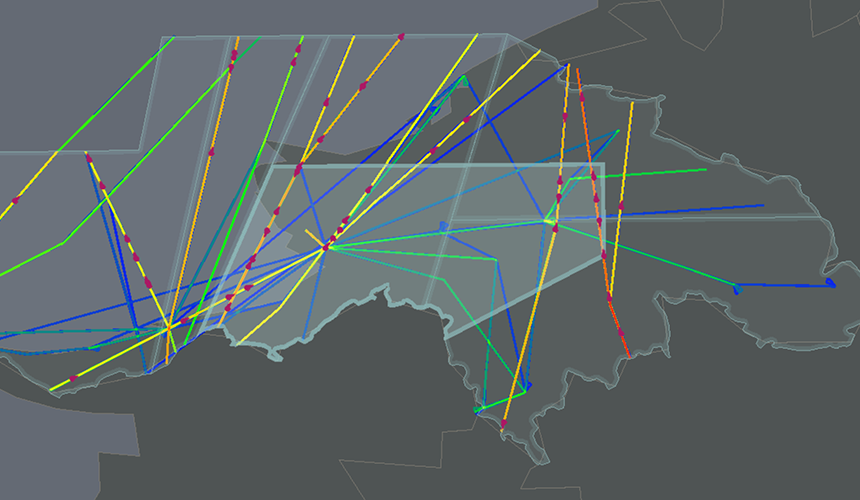
Airspace scenario modeled in AirTOP, showing aircraft trajectories and multiple sectorisation schemes.
Establishing the Baseline
Considering all these definitions and assumptions, the baseline of any capacity calculation methodology can be established as follows:

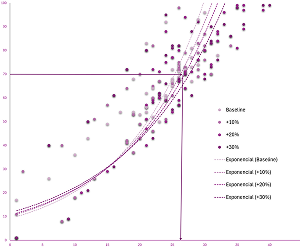
Capacity declaration using ATCO workload and sector entry calculation from AirTOP.
The Importance of Fast-Time Simulation in Capacity Studies
Fast-time simulations offer a significant advantage by providing a realistic representation of airport and airspace operations. This facilitates the assessment of proposed modifications without disrupting actual operations, saving time and resources. As a result, fast-time simulations have become a crucial tool for ANSPs and airports in capacity studies.
This process revolves around two main events: the fast-time simulation modeling to obtain all flight events, and the workload model to translate said events into measurable calculations. The combination makes it possible to obtain capacity per position as a function of the control service provided.
How Workload is Quantified and Analysed
For workload analysis, the methodology relies on different theories or processes, usually based on the use of cognitive channels. The purpose of these cognitive models is to evaluate the resources required for ATC activities, to determine whether this demand stays within human factor limits, and to not put operations at risk.
To quantify the level of controller activity, each set of control events within a given time interval will be linked to a value that estimates ATC workload. Some workload calculation methods consider that equal events require the same time and effort from the controller. Others, however, account for the unique characteristics of each flight, recognising that some inbound events are easier while others are more complex. Therefore, the cognitive effect corresponding to each calculation is applied, factoring in the weights assigned to the channels used, as well as the interference that occurs between these cognitive channels. As a result, each action of the controller has a different weight depending on the resources demanded.
The events performed by a controller can and will occur separately and consecutively or, on the contrary, simultaneously. Simultaneous tasks increase workload as they reduce the execution time and places greater demands on resources. The latter type of workload measurement method allows a task-level description and considers the non-linear relationship between workload and occupancy time. It also considers the complexity of actions, and how decision-making is harder if there are several decisions to take at the same time
By adding all these events, tasks, and actions over time, and considering the interference between them, an instantaneous workload can be visualised. This data can then be used to create workload vs aircraft per hour graphs and compare several scenarios. For example, scenarios with new taxiways or updated instructions for aircraft crossing the runway.
Turning Simulation Data into Actionable Insights
Transoft Solutions’ fast-time simulation tool, AirTOP, is used for modeling the behavior of airspace and airports, allowing users to assess the impact of changes in infrastructure and operations. It generates detailed information about the flight events required for an aircraft to operate within the airport environment. By analysing the output data from the simulation, a schematic of the activities performed by control personnel can be built, as an aircraft’s status only changes with controller authorisation.
The simulation output provides a complete record of all the phases the aircraft has gone through within the analysed area, which are then translated into ATC actions, each assigned to different workload values. Once the scenario is simulated, it becomes possible to study the workload distribution across different areas of responsibility or determine how to deploy appropriate positions according to the expected traffic movements. It is also possible to analyse what benefits can be expected when joining or deploying certain positions.
Transoft Solutions look forward to discussing AirTOP’s full capabilities with you at booth G37.
Copyright © 2025
Platinum Sponsors:
Getting to Airspace Asia Pacific using Hong Kong, China’s extensive public transport network could not be easier. Here’s your guide on how to get to the show.

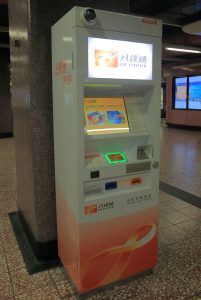
The Octopus Card is the easiest way to use Hong Kong’s extensive metro, bus and tram network. The easiest thing to do is to buy your Octopus Card on arrival at Hong Kong Airport at the Airport Express counter, or at the Octopus Card vending machines in Metro stations. Keep HK$100 as a balance on your card for easy travel (you can top the card up at ticket machines across the network) and tap and go for all buses, metro, ferries.


These QR codes will help make planning your journeys easier.


How to get to Airspace Asia Pacific

Copyright © 2025
Platinum Sponsors:
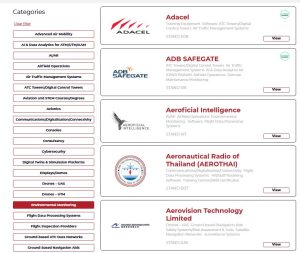
With around 100 exhibitors and over 5,000 square metres of floor space, there is plenty to see and explore at Airspace Asia Pacific. And to help attendees find their way around, both AirspaceAsiaPacific.com and the Airspace Asia Pacific App have fully interactive guides to our exhibitors and exhibition hall.
To see exactly who is exhibiting at the show, use the Exhibitors section of the event website. Here you’ll find the full list of organisations at Airspace Asia Pacific, each with a description of who they are and what they do. The list is alphabetical, but you can also search for an exhibitor by name. Especially useful is the ability to filter exhibitors by industry type or specialisms, showing you exactly who is there to meet any specific area attendees are investigating.

Here are just a few of the exhibitors you can look out for on the exhibition floor.
Frequentis supports the Asia Pacific region in managing rapid air traffic growth through innovation and collaboration. The company enables ANSPs to integrate best-in-class solutions into one operational environment, free from vendor lock-in. Our focus spans digital towers for high-capacity airports, trajectory-based operations for efficient flight management, unified aeronautical communications for seamless coordination, and ATM-grade networks that provide a resilient backbone for modern ATM — supporting the region’s transformation toward a digital, sustainable, and safe airspace ecosystem.
Frequentis is on stand K07
CANARD by ITE is the leading drone-based solution for NAVAID and airport inspections for both civil and military airfields. CANARD is an integral solution that helps airports all over the world. It provides solutions for Visual Aids (PAPI calibration, ALS inspection, runway lights inspection), NAVAIDs (ILS inspection, VOR) and infrastructure (PCI, runway markings and FOD). All of our operational procedures are based on international standards and regulations such as those developed by ICAO or FAA.
CANARD by ITE is on stand D47
Guntermann & Drunck invites attendees to discover the future-ready Controller Working Position and see how its advanced KVM and Visual Workflow solutions empower ANSPs to enhance efficiency, safety, and operator comfort. Visitors to the stand will experience seamless multi-system control, optimised situational awareness, and flexible layout configurations designed for dynamic ATC environments. They will also see how G&D enables smarter decision-making, reduces controller workload, and ensures reliable, intuitive workflows for tomorrow’s airspace operations.
Guntermann & Drunck is on stand K39.
Find your way around with the interactive floor plan
Working your way around the exhibition floor is easier than ever with Airspace Asia Pacific’s interactive floor plan.
The plan allows you to click on each exhibitor (listed alphabetically on the left hand side of the page) to then see exactly where they are in the hall as their stand is highlighted on the plan.
Do it all on the app
Agnes Krischik, Airspace World Show Director, said: “The floor plan and exhibitor list are both available on the Airspace Asia Pacific app. The app also contains the theatre agenda for the show, which comes with the ability for attendees to design their own agendas of what they want to see and when. Those three tools are designed to give each attendee the optimum Airspace Asia Pacific experience and I encourage all attendees make the most of them.”
To download the app, click here for the desktop version, or simply scan QR code below with your mobile device, or search Airspace Asia Pacific in your app store.

Copyright © 2025
Platinum Sponsors:
The Airspace Asia Pacific Conference opens on Tuesday 9 December with a dynamic theatre programme designed to bring you the best in industry thought leadership, policy discussion, operational insight, and future-focused innovation.
Shaped around the themes of integration, innovation, and the sustainable evolution of Asia-Pacific airspace, the theatre programme on days one and two captures the very best of the Asia Pacific air traffic management community and its contribution to the global aviation conversation.
In both the Frequentis and Seamless Skies Theatres, attendees will hear directly from CEOs, operational leaders, regulators, innovators, and experts driving the transformation of Air Traffic Management (ATM) across Asia Pacific. From CATS CONOPS 2045 to uncrewed integration, civil-military coordination, and the operationalisation of transformative technologies, these sessions represent an unparalleled opportunity for attendees to immerse themselves in the issues shaping both regional and global skies.
Here are the theatre highlights for Tuesday 9 December and the first part of Wednesday 10 December. And check out the full programme here to make sure you don’t miss out.
Day One highlights (Tuesday 9 December)
Frequentis Theatre — 09:30–10:15
Welcome Ceremony
The conference opens with the official Welcome Ceremony. Expect thought-provoking remarks from regional leaders in recognition of Asia Pacific’s growing global influence in a ceremony that underscores Airspace Asia Pacific’s position as the region’s flagship airspace integration and innovation event.
CATS CONOPS 2045 – Shaping the Future Skies
Frequentis Theatre — 12:30–13:20
This session examines how the Complete Air Traffic System’s (CATS) CONOPS 2045 envisions a fully integrated, efficient, and scalable operational environment — one capable of accommodating rapid traffic growth, new entrants, and increasingly complex operations.
Speakers will explore how the CONOPS informs planning within the Asia Pacific region, how ANSPs are already aligning to its principles, and where collective action can accelerate transformation.
With Asia Pacific expected to see some of the world’s fastest traffic growth, this is a must-attend for operational leaders, planners, and innovators alike.
From Vision to Reality: Transformation Strategies Across APAC
Frequentis Theatre — 14:00–14:50
Moving from strategic frameworks to practical implementation, this session focuses on the concrete transformation strategies underway across Asia Pacific. You’ll get insights into operational modernisation, regulatory readiness, investment priorities, and collaborative approaches to upgrading airspace systems.
This discussion is especially relevant for ANSPs, technology providers, and government representatives looking at scalable, region-wide approaches to ATM evolution.
Shared Airspace – Seamless Integration of Uncrewed and Manned Aviation
Seamless Skies Theatre — 15:00–15:50
Uncrewed aircraft integration remains one of the defining challenges of the next decade. This session provides a rich exploration of how the Asia Pacific region can achieve safe, seamless coexistence between crewed and uncrewed aircraft. Expect practical insights on UTM-ATM integration, airspace design, digitalisation, and operational governance.
Speakers will spotlight regional trials, regulatory developments, and real-world integration scenarios, underscoring how Asia Pacific can leapfrog legacy constraints to build future-ready airspace.
Day two highlights (Wednesday 10 December)
The Myth of ATM Innovation
Seamless Skies Theatre — 10:00–10:50
This provocative session challenges assumptions about innovation in ATM — asking whether the industry is truly as slow-moving as critics claim, or whether progress is simply complex, safety-driven, and often under-recognised. Expect honest reflections, real examples, and actionable ideas for strengthening innovation ecosystems.
Pathway to Advanced Air Mobility – Launching Regional AAM into the Future
Frequentis Theatre — 12:00–12:50
AAM represents one of the most exciting developments in regional mobility. This session provides a roadmap for bringing AAM from concept to implementation across APAC’s unique operational and regulatory landscapes. Speakers will examine airspace integration, infrastructure needs, safety assurance, and collaborative models between industry and government.
Civil–Military ATM Cooperation Through Digitalisation
Seamless Skies Theatre — 13:00–13:50
Civil–military cooperation is a recurring theme across APAC, where shared airspace and national requirements demand ever closer alignment. This session highlights how digital tools, data exchange, and shared situational awareness are transforming cooperation models — improving efficiency, resilience, and security.
Integrating Airport CDM and ATFM
Frequentis Theatre — 14:00–14:50
The final key highlight in this block turns attention toward higher-performance airport operations. Speakers will discuss the challenges and solutions involved in integrating Airport Collaborative Decision-Making (A-CDM) with Air Traffic Flow Management (ATFM). Expect technical insight, case studies, and lessons learned from some of the region’s busiest hubs.
Copyright © 2025
Platinum Sponsors:
Hong Kong, China, is one of the world’s most vibrant, culturally rich, and enticing cities in the world. If you are staying on after Airspace Asia Pacific, or have time during your stay, here are some of the must-see sights to take in.
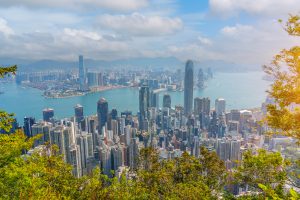
Victoria Peak (“The Peak”)
Ride the famous Peak Tram up to Victoria Peak for panoramic views over Hong Kong’s skyline, harbour and outlying islands. This is the city’s classic “must-see” vantage point.
To get there you can either take a taxi from Central Station to Peak Tram Lower Terminus or, if you take exit J2 signposted for Garden Road/Peak Tram, it’s an interesting 15-minute walk.
You can also take bus 15C from the Central Ferry Pier. Buses run every 15-20 minutes.

Top tip: Go close to sunset so you catch the city changing from daylight into night-light.
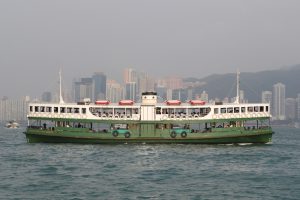
Take the Star Ferry across Victoria Harbour from Kowloon to Hong Kong Island

This short but iconic ferry ride gives you superb harbour views and a taste of Hong Kong’s maritime character.
Explore the bustling street markets
Wander through the vibrant markets of Mong Kok, Tsim Sha Tsui or elsewhere — from street food stalls, to souvenirs, fashion, flowers, and local colour.
See Hong Kong Island’s spectacular skyline and the Symphony of Lights

At any time of the day, the Hong Kong Island skyline is a spectacular sight, and at night it is even more special. The Tsim Sha Tsui waterfront in Kowloon is one of the best vantage points, especially for the world famous Symphony of Lights which takes place every night at 20:00.
Visit Nan Lian Garden & Chi Lin Nunnery

Far from the skyscrapers, this peaceful classical Chinese garden and adjacent temple complex provide calm, green space and cultural atmosphere. Take the MTR Kwun Tong line to Diamond Hill, take exit C2, and it’s a three minute walk following the signs to Nan Lian Garden. The nunnery is across a footbridge at the far end of the garden.
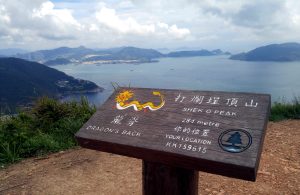
Hike the Dragon’s Back trail

Get a sense of Hong Kong’s surprising outdoors with a walk along the Dragon’s Back ridge. Wear good shoes though and take some water.
To get there take the MTR Island Line to Shau Kei Wan station, and then take exit A2 and take bus 9 towards Shek O. Get off at To Tei Wan on Shek O road (you will hear an announcement of the stop) and the trail starts opposite the bus stop, marked with clear signs.
On completion of the hike, at Big Wave bay, you can take minibus 9 or a taxi back to Shau Kei Wan station.
Visit the Ten Thousand Buddhas Monastery

A little outside of the main tourist zones, this hillside complex near Sha Tin features thousands of little Buddha statues and a dramatic stair climb.
Take the Metro to Sha Tin station on the East Rail Line. Take Exit B and follow signs through the New Town shopping mall to Pai Tau Street. At the end of Pau Tai Street you will see a small sign for the monastery pointing towards a narrow path. Walk up the path and you’ll reach the steep stair case lined with golden Buddha statues.
A taxi will also take you there directly. The monastery is open from 09:00-17:00.
Explore SoHo, Wan Chai & Tsim Sha Tsui
From high-end boutiques to local eateries and rooftop bars, these neighbourhoods deliver a rich urban experience. Perfect for an evening wander.
SoHo is near Central Station and runs along nearby Elgin, Staunton and Shelley Streets, while Wan Chai and Tsim Sha Tsui have their own Metro stations.
You can get more tips and updates about things to do in Hong Kong by following Hong Kong Tourism on Instagram or on Facebook.
Copyright © 2025
Platinum Sponsors:
Copyright © 2025
Platinum Sponsors:
Eduardo Garcia, CANSO’s Senior Manager, Future Skies says Asia Pacific is not just a fast-growing aviation market, it is also a global epicentre of airspace transformation
Every year, traffic growth, regional connectivity and the emergence of new aviation actors push the boundaries of what air traffic management must deliver. Asia Pacific’s complexity is unique, its pace unmatched and its potential extraordinary.
Airspace Asia Pacific 2025, organised by CANSO, brings together the full airspace ecosystem – ANSPs, airlines, airports, regulators, industry, innovators, and new entrants – to collaborate, debate, and shape the future of air traffic management at a pivotal time. It is a strategic gathering focused on solutions, shared challenges, and long-term transformation.
Defined by momentum
Asia-Pacific is experiencing rapid and sustained growth across every segment of aviation, including:
Managing this growth requires not only technology but also coordination, shared ambition and trust. No actor can succeed alone – which makes the collaborative spirit of Airspace Asia Pacific more important than ever.
Designed for transformation
A central theme throughout the event will be the work of the Complete Air Traffic System (CATS) Concept of Operations (CATS CONOPS). This global framework provides a long-term vision for future skies through 2045, exploring how automation, digitalisation, advanced analytics, enhanced system coordination and new operating models can fundamentally reshape the way air traffic is managed.
The ambition is to translate this global vision into regional realities. We need to understand what practical steps are required to deliver coordinated airspace transformation across Asia Pacific. This means looking at how investment, harmonisation, workforce readiness and digital infrastructure can support seamless, data-driven, and highly automated operations in the coming decades.
Technology and innovation will be vital. Panels at Airspace Asia Pacific will explore how automation, artificial intelligence (AI)-enabled optimisation, digital twins and distributed cloud-based systems will define tomorrow’s ATM infrastructure. There are long-held assumptions about the conservatism of the ATM industry – particularly in Asia-Pacific – but the real barriers to progress are not necessarily technological but policy-driven.
Another major theme is Advanced Air Mobility (AAM). With several pioneering cities and States in Asia-Pacific already running trials or developing frameworks for eVTOL (electric take-off and landing) and drone operations, there is a need to bring together regulators, manufacturers and service providers to explore how to scale safe and efficient AAM ecosystems. Topics range from vertiport infrastructure and digital traffic management to public acceptance and the link between AAM and existing ATM structures, drawing directly on the CATS pathway to AAM and ICAO’s evolving global vision.
As uncrewed operations grow, the question of how to share the skies becomes critical. A panel at Airspace Asia Pacific, Shared Airspace – Seamless Integration of Uncrewed and Manned Aviation, will examine the operational and technological solutions needed to enable safe, scalable mixed operations, from UTM/ATM harmonisation and automation to controller tools and real-time data exchange.

The human dimension is equally prominent, and Asia Pacific has an important role to play. CANSO’s Tomorrow’s Voices initiative focuses on the future workforce: how to attract talent into ATM, how to build diverse and inclusive teams and how to prepare people for increasingly digital, collaborative roles. Asia Pacific will need thousands of new aviation professionals in the coming decades and so creating purpose-driven, innovative career paths is essential.
Civil–military cooperation is another area where Asia-Pacific can shape global best practice. Information sharing, flexible use of airspace and modern tools can unlock capacity while respecting national defence needs.
Airspace Asia Pacific will be a strategic platform for shaping the future skies of a region that will drive global aviation for decades to come. By bringing together visionary concepts like the CATS CONOPS, practical roadmaps for implementation, pioneering AAM efforts and honest conversations about performance, cooperation and innovation, the event offers a unique opportunity for stakeholders to move forward together.
Asia Pacific will manage rapid growth while reinventing air traffic management and Airspace Asia Pacific is the first step on that path.
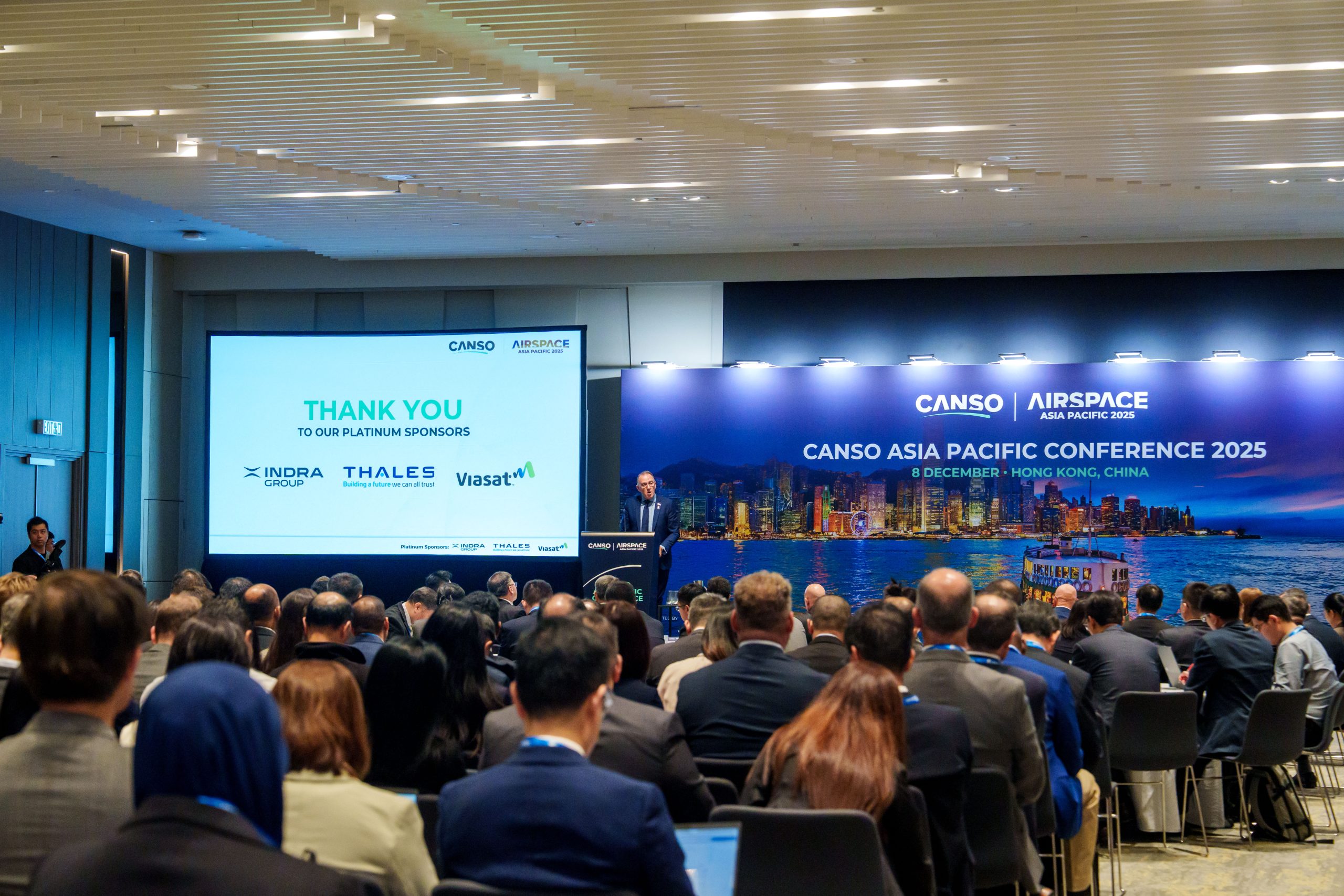
Hong Kong, China – 8 December 2025 – Aviation and meteorology leaders from across the Asia Pacific region gathered today at AsiaWorld-Expo in Hong Kong, China for the CANSO Asia Pacific Conference 2025, setting the stage for the official opening of Airspace Asia Pacific 2025 starting tomorrow, dedicated to strengthening collaboration, improving operational resilience, and shaping the region’s future skies.
Held under the theme “Seamless APAC Airspace – Aviation and Meteorology Integration,” the one-day conference brought together Directors General, CEOs, senior decision-makers, and technical experts from ANSPs, civil aviation authorities, meteorological services, airports, and research organisations.
The Conference opened with keynote remarks from Mr Ma Bing, Deputy Administrator, Civil Aviation Administration of China (CAAC), who emphasised the shared responsibility of aviation and meteorology authorities to safeguard regional airspace in the face of increasingly unpredictable weather patterns.
He was joined by CANSO’s President and CEO, Simon Hocquard, who highlighted the Asia Pacific region’s rapid growth and the need for deeper cooperation to ensure safety, efficiency, and sustainability.
Also delivering opening addresses were Mr Tao Ma, Regional Director, ICAO Asia Pacific Office; Mr Victor Liu, Director-General of the Hong Kong Civil Aviation Department (HKCAD); and Mr Han Kok Juan, Chair of the Asia Pacific CANSO CEO Committee (APC3) and Director-General of the Civil Aviation Authority of Singapore (CAAS).
Their combined perspectives underscored the region’s shared commitment to building an integrated, data-driven approach to airspace management.
With strong participation and high-level dialogue throughout the day, the CANSO Asia Pacific Conference 2025 successfully set the tone for Airspace Asia Pacific 2025, opening tomorrow at AsiaWorld-Expo. The exhibition will continue the week’s discussions with demonstrations, partner showcases, and industry engagement on the future of aviation in the region.
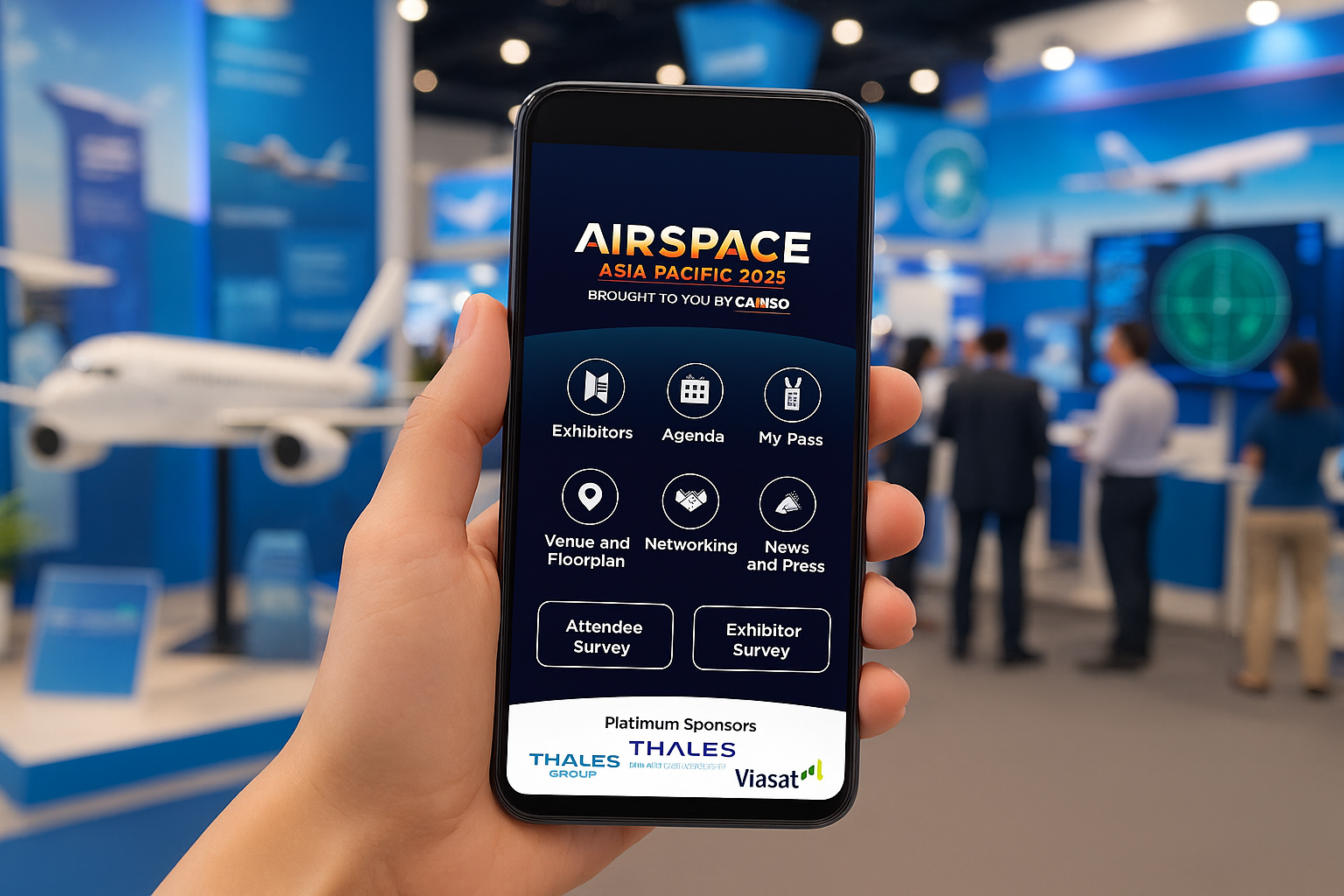
The Airspace Asia Pacific 2025 app is now available to download on Apple and Android phones and mobile devices.
Those registered to visit Airspace Asia Pacific, the region’s largest air traffic management event, can now make exclusive use of the new Airspace Asia Pacific app’s many features, all of which are designed to make their visit to the event the best, and most productive it can be.
A key feature of the app is its enhanced networking features, which allow attendees to connect with new and existing colleagues and contacts, and request meetings with colleagues from across the airspace industry. By registering their app account using their Airspace Asia Pacific registration details, and setting up their networking profiles, attendees will be able to see who else is has done the same, send them messages, and invite them to meet.
The app also includes searchable details of each day’s full agenda of sessions and speakers at Airspace Asia Pacific’s two theatres, the full list of exhibitors, and an interactive event map.
Bookmarking allows users to keep their favourites sessions to hand, and save meetings to their agendas too.
Airspace Asia Pacific Today, the show’s exclusive news publication, will share highlights of the show in a newsletter which will be available on the app, on the show website, and directly emailed to all registered attendees. A special launch edition will give attendees a full guide to the show, to Hong Kong, and to the key theatre sessions to look out for, while a mid show edition will include highlights and thought leadership pieces. Finally, an end of show edition will wrap up the entire Airspace Asia Pacific experience.
The app’s News and Press will also bring attendees news updates and press releases from all the Airspace Asia Pacific exhibitors.
Agnes Krischik, Airspace Asia Pacific Show Director, said: “As we launch the inaugural Airspace Asia Pacific, the event app is a great way for attendees to make the most of their time by planning their visit, and by making sure they connect with the collegues they need to. Download it now!”
To download the app, click here for the desktop version, or simply scan QR code below with your mobile device, or search Airspace Asia Pacific in your app store.

Copyright © 2025
Platinum Sponsors: