





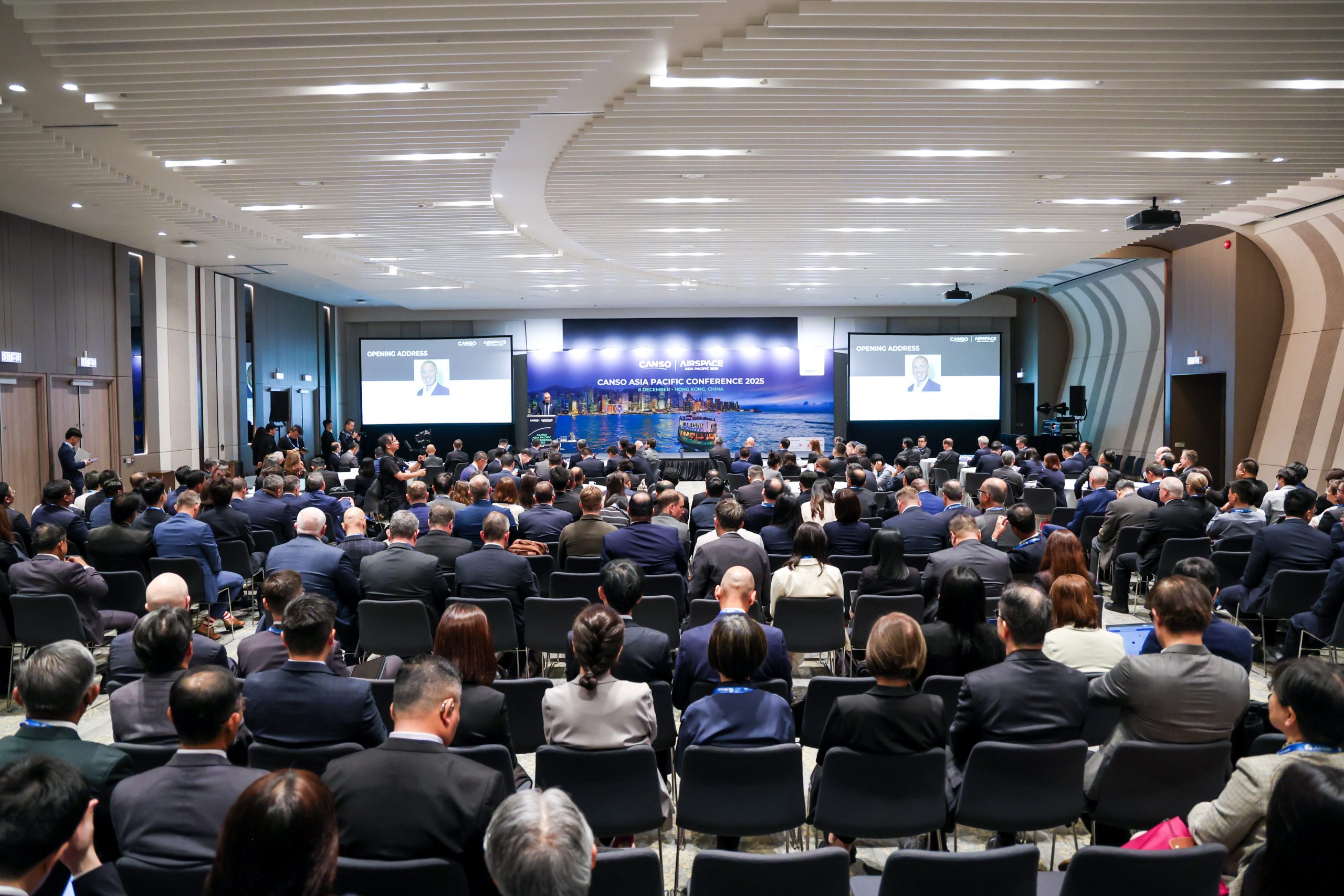
Aviation and meteorology experts from across the region came together at the start of Airspace Asia Pacific for the CANSO Asia Pacific Conference 2025, a one-day gathering focused on strengthening collaboration to manage increasingly volatile weather across the Asia Pacific region.
Held at AsiaWorld-Expo, the conference centred on the theme “Seamless Asia Pacific Airspace – Aviation and Meteorology Integration,” reflecting the industry’s growing need for unified approaches to weather-related disruption. Delegates included representatives from air navigation service providers (ANSPs), civil aviation authorities, meteorological agencies, airports, and aviation researchers.
Senior leaders from CANSO, ICAO and regional partners opened the event, emphasising the shared responsibility to enhance safety and resilience in one of the world’s busiest aviation markets. They highlighted how extreme weather events — intensified by climate change — are placing new pressures on airport operations, air traffic management (ATM), and cross-border coordination.
Weather, coordination and resilience dominate discussions
Across three focussed sessions, speakers explored the scientific, operational and strategic dimensions of weather-related challenges in ATM.
The opening session; “Navigating the Storm – The Science and Challenges of Weather,” examined the complexities of forecasting and the operational impact of severe and rapidly changing weather patterns. Meteorological specialists outlined how evolving climate behaviour is increasing uncertainty for aviation, while ANSPs shared examples of recent disruptions and the lessons learned.
This was followed by “Bridging the Skies – Operational Synergy Through Integration and Coordination,” which looked at how aviation and meteorology communities can work more closely to reduce the impact of weather on flight operations. Case studies highlighted the benefits of shared data, harmonised procedures and real-time coordination between ANSPs and national weather services. Several speakers noted that improving communication channels remained a fundamental step toward more predictable and efficient operations.
The final session, “Next Steps to Build Resilience – Strengthening the Aviation and Meteorology Ecosystem,” brought together leaders from across the region to discuss long-term strategies. Panellists emphasised the need for investment in resilient infrastructure, enhanced decision-support tools, and a stronger culture of collaboration between operational and scientific communities. Many agreed that building resilience would require sustained commitment beyond individual projects — with cross-agency partnerships seen as key to future progress.
Opening the conference, Simon Hocquard, President and CEO, CANSO, said: “Over the next two decades, Asia Pacific traffic is expected to rise faster than any other region in the world. Airspace capacity, ATM systems, and operational concepts will all be placed under unprecedented pressure.
“The impact of climate change is a central theme of this summit. In recent years, extreme weather has no longer been an occasional disruptor. It has become a constant variable and requires a structural response
“That means extending collaboration to include meteorological service providers too, which is why I am delighted to be joined by many of you today.”