





Hong Kong is no stranger to the seasonal phenomenon of typhoons, which significantly impacts the region’s air traffic system. Hong Kong Civil Aviation Department shares its lessons learned from adverse weather incidents.
Hong Kong’s peak typhoon season spans from May to November, with the most intense storms usually occurring between August and October.
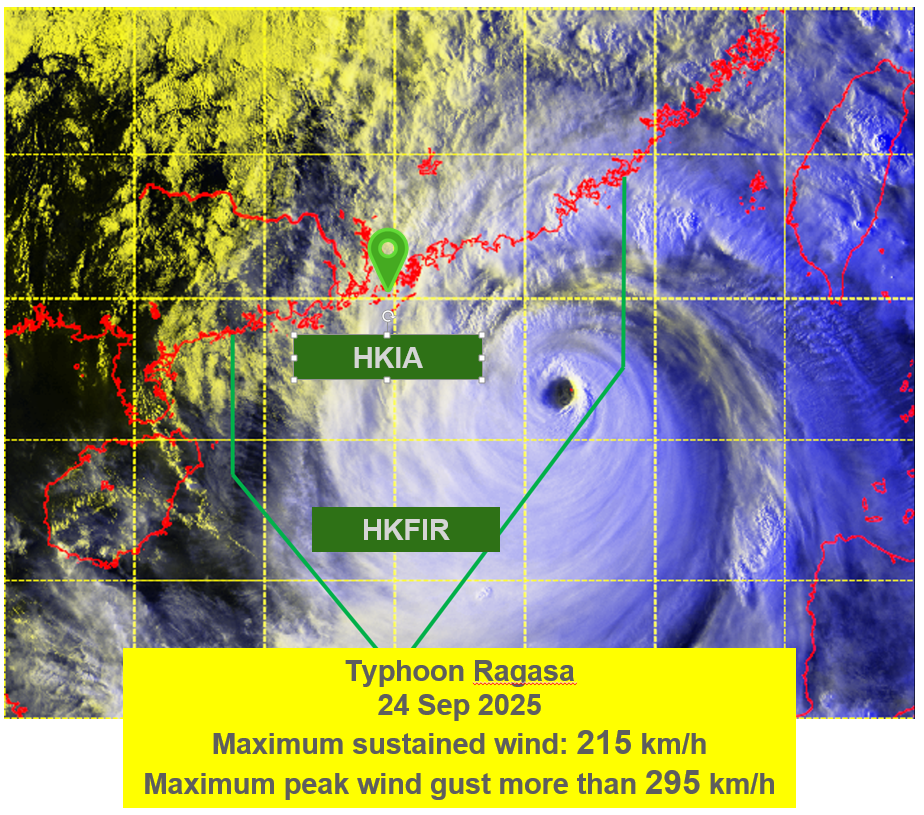
Typhoons in this region can vary greatly in duration and intensity. For instance, Typhoon Ragasa, which struck in September 2025, was one of the most powerful recorded storms, lasting for 70 hours and reaching maximum wind speeds exceeding 200 km/h. Such frequent and extreme weather events, especially during the last summer season, pose serious challenges to air traffic management, necessitating a coordinated and robust response from air navigation service providers (ANSPs) to ensure safety and minimise disruptions.
The effects of typhoons on airspace management cannot be overstated. When typhoon conditions develop, Air Traffic Flow Management (ATFM) measures are initiated to manage air traffic and prioritise safety. During Typhoon Ragasa, many airlines operating in or out of Hong Kong International Airport (HKIA) opted to cancel flights due to associated deep convection or strong crosswinds, resulting in significant disruptions at HKIA. Overflights re-routed via other Flight Information Regions (FIR) to stay away from the typhoon.
The operational complexities that arise from these extreme weather conditions are substantial; aircraft already airborne may be diverted to neighbouring airports, leading to airspace congestion and additional workload for air traffic control (ATC) as they seek alternatives to avoid hazardous weather.
This disruption not only affects local air traffic but also creates a ripple effect, resulting in delays and disruptions across regional networks. The need for more ATC staff for operational flexibility and effective communication becomes critical in these scenarios. The Three-Runway System (3RS) at HKIA, commissioned in November 2024, has introduced more dynamic management capabilities, but it also means that flight rescheduling is necessary to handle significant backlogs once weather conditions improve.
In 2025, responses to typhoons have reflected an increasing awareness of the necessity for preparedness and adaptability. One significant lesson learned by Hong Kong Civil Aviation Department (HKCAD) is the importance of real-time communication among key stakeholders, including ATC, airlines, the Airport Authority Hong Kong (AAHK), and the Hong Kong Observatory (HKO). Enhanced collaboration ensures that crucial weather information is disseminated promptly, allowing airlines to make informed decisions regarding flight operations. This proactive approach has been essential in optimising air traffic flow and resource allocation during severe weather alerts.
Moreover, the integration of technology has strengthened the resilience of the aviation sector. The HKO has implemented advanced meteorological tools that utilise artificial intelligence (AI) to provide more precise weather forecasting. This technology facilitates predictive modelling, enabling early assessments of potential impacts. Notably, the Deep Convection Notification Service (DCNS) has been created to allow for early prediction of deep convection events, which can significantly affect flight safety and operations. By leveraging these innovations, HKCAD can implement ATFM measures swiftly, thereby enhancing the overall safety and efficiency of air traffic management.
Moving forward, a multi-faceted approach is critical for managing extreme weather events in Hong Kong. Ongoing evaluations of operational protocols, strengthened stakeholder collaboration and continuous technology integration will be vital in ensuring smooth recovery processes from disruptions caused by typhoons. As climate change continues to influence weather patterns, the necessity for adaptive strategies in air traffic management becomes increasingly apparent. By learning from past experiences and refining response strategies, the sector can bolster its resilience against the challenges posed by typhoons and ensure safety for all travellers.
Investment in training and drills that simulate extreme weather scenarios is also essential. Engaging all stakeholders in tabletop exercises can facilitate a deeper understanding of coordination efforts and improve readiness for real situations. This training is essential not only for responding to typhoons but also for other extreme weather events that could impact flight operations, such as heavy rainfall or sudden shifts in wind patterns.
Handling extreme weather events like typhoons in Hong Kong requires a concerted effort involving multiple stakeholders, real-time communication and continuous improvement in operational practices. The aviation industry must embrace a culture of preparedness, utilising advanced technologies and collaborative strategies to effectively manage the impact of severe weather. As the region faces an increasingly unpredictable climate, the lessons learned this year will inform future preparedness and response strategies, ensuring that Hong Kong remains a leading international aviation hub while effectively meeting the challenges of extreme weather.
By taking proactive measures now, Hong Kong’s aviation sector intends to enhance its resilience and maintain high safety and operational standards, securing the trust of airlines and travellers alike.