





Eduardo Garcia, CANSO’s Senior Manager, Future Skies says Asia Pacific is not just a fast-growing aviation market, it is also a global epicentre of airspace transformation
Every year, traffic growth, regional connectivity and the emergence of new aviation actors push the boundaries of what air traffic management must deliver. Asia Pacific’s complexity is unique, its pace unmatched and its potential extraordinary.
Airspace Asia Pacific 2025, organised by CANSO, brings together the full airspace ecosystem – ANSPs, airlines, airports, regulators, industry, innovators, and new entrants – to collaborate, debate, and shape the future of air traffic management at a pivotal time. It is a strategic gathering focused on solutions, shared challenges, and long-term transformation.
Defined by momentum
Asia-Pacific is experiencing rapid and sustained growth across every segment of aviation, including:
- Commercial air traffic.
- Cross-border flows.
- National investments in digitalisation.
- High-altitude operations, commercial space and drones.
- Advanced Air Mobility.
Managing this growth requires not only technology but also coordination, shared ambition and trust. No actor can succeed alone – which makes the collaborative spirit of Airspace Asia Pacific more important than ever.
Designed for transformation
A central theme throughout the event will be the work of the Complete Air Traffic System (CATS) Concept of Operations (CATS CONOPS). This global framework provides a long-term vision for future skies through 2045, exploring how automation, digitalisation, advanced analytics, enhanced system coordination and new operating models can fundamentally reshape the way air traffic is managed.
The ambition is to translate this global vision into regional realities. We need to understand what practical steps are required to deliver coordinated airspace transformation across Asia Pacific. This means looking at how investment, harmonisation, workforce readiness and digital infrastructure can support seamless, data-driven, and highly automated operations in the coming decades.
Technology and innovation will be vital. Panels at Airspace Asia Pacific will explore how automation, artificial intelligence (AI)-enabled optimisation, digital twins and distributed cloud-based systems will define tomorrow’s ATM infrastructure. There are long-held assumptions about the conservatism of the ATM industry – particularly in Asia-Pacific – but the real barriers to progress are not necessarily technological but policy-driven.
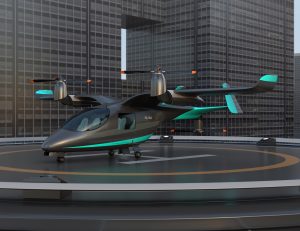
Another major theme is Advanced Air Mobility (AAM). With several pioneering cities and States in Asia-Pacific already running trials or developing frameworks for eVTOL (electric take-off and landing) and drone operations, there is a need to bring together regulators, manufacturers and service providers to explore how to scale safe and efficient AAM ecosystems. Topics range from vertiport infrastructure and digital traffic management to public acceptance and the link between AAM and existing ATM structures, drawing directly on the CATS pathway to AAM and ICAO’s evolving global vision.
As uncrewed operations grow, the question of how to share the skies becomes critical. A panel at Airspace Asia Pacific, Shared Airspace – Seamless Integration of Uncrewed and Manned Aviation, will examine the operational and technological solutions needed to enable safe, scalable mixed operations, from UTM/ATM harmonisation and automation to controller tools and real-time data exchange.
The human dimension is equally prominent, and Asia Pacific has an important role to play. CANSO’s Tomorrow’s Voices initiative focuses on the future workforce: how to attract talent into ATM, how to build diverse and inclusive teams and how to prepare people for increasingly digital, collaborative roles. Asia Pacific will need thousands of new aviation professionals in the coming decades and so creating purpose-driven, innovative career paths is essential.
Civil–military cooperation is another area where Asia-Pacific can shape global best practice. Information sharing, flexible use of airspace and modern tools can unlock capacity while respecting national defence needs.
Airspace Asia Pacific will be a strategic platform for shaping the future skies of a region that will drive global aviation for decades to come. By bringing together visionary concepts like the CATS CONOPS, practical roadmaps for implementation, pioneering AAM efforts and honest conversations about performance, cooperation and innovation, the event offers a unique opportunity for stakeholders to move forward together.
Asia Pacific will manage rapid growth while reinventing air traffic management and Airspace Asia Pacific is the first step on that path.